
Get Clear on What’s in Your Water
Is This Whole-Home Filter Right for You?
Schedule a free 30-minute Zoom call to review your water, discuss your concerns, and find out if this whole-home filtration option is right for your home, your family, and your health.
No pressure. No obligation. Just clarity.
Here’s what homeowners love about making the switch:
- Small footprint
- No salt required
- No electricity
- No chemicals required
- No service contracts
- No wastewater
- High flow with ultra filtration
No pressure. No obligation. Just clarity.
Protect Your Home. Improve Every Tap.
Pure Way is designed to do more than filter drinking water. It protects your entire home from scale, sediment, and harmful contaminants while delivering clean, great-tasting water to every faucet, shower, and appliance. From plumbing and fixtures to skin, hair, and daily use, Pure Way works quietly in the background to improve how water moves through your home — without stripping away the minerals your body needs.
How Pure Way Works
This video walks through how the Pure Way system works and why it was designed differently from traditional water softeners and single-purpose filters.
You’ll see how each stage plays a role in reducing contaminants, conditioning minerals, and protecting plumbing and appliances — all while maintaining strong water pressure and everyday usability.
Rather than targeting one issue at a time, Pure Way takes a whole-home approach built for real-world water conditions, long-term reliability, and low maintenance.
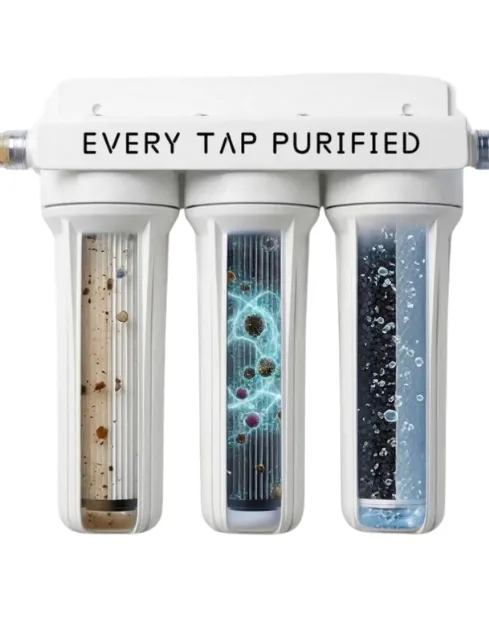
About Our System
Stage-by-Stage Breakdown

Stage 1: Pure Shield
High-Flow Sediment & Scale Protection Creates smoother, more predictable water for your home while setting the foundation for the advanced stages that follow.

Stage 2: Nano Armor
Molecular-Level Filtration & Microbiological Defense Supports deeper refinement at the molecular level without slowing down your home’s water pressure.

Stage 3: Chem Guard
Advanced Carbon Finishing & Taste Refinement This stage gives your water the crisp, clean finish people immediately notice.
Plumbing and Appliance Longevity
Protect Your Home from Scale and Build Up
Hard water scale doesn’t just show up on surfaces — it builds up inside pipes, appliances, and heating elements, where it quietly causes long-term damage.
No pressure. No obligation. Just clarity.
Plumbing Protection
Helps reduce mineral scale inside pipes, where buildup can restrict flow and contribute to long-term wear.
Appliance Longevity
Supports better performance and lifespan for water heaters, dishwashers, washing machines, and tankless systems.
Fixture & Valve Support
Helps reduce internal buildup in valves, cartridges, and fixtures that are costly to replace.
No Salt, No Electricity
Scale protection without salt bags, drain lines, or power requirements.
Conditions Minerals without Stripping
Conditions minerals rather than removing them entirely,
Aggressive softening systems remove minerals entirely
Increase water corrosivity, which may contribute to pipe degradation, leaching, and premature fixture wear.
Whole Home Protection with 3rd Party Testing
Whole Home Protection with
3rd Party Testing
Product Features

Every Tap, Every Drop
Clean, refined water for drinking, bathing, cooking, and cleaning—throughout your home.

Sediment & Scale Defense
Helps reduce sediment, rust, and scale before reaching pipes and appliances.
Intelligent Filtration
Targets contaminants while keeping beneficial minerals naturally dissolved.

Microbiological Support
Designed to capture microbiological fragments with silver-infused media support.

Low-Maintenance Design
Long-lasting media with multi-year service intervals based on usage.

Independently Tested
Components tested to NSF/ANSI standards by accredited third-party labs (IAPMO).
No pressure. No obligation. Just clarity.
Peace of Mind with Independent Testing
Third-Party Testing
Systems and materials independently stress-tested to recognized NSF/ANSI standards for safety, performance, and material integrity.
We believe clean water systems should be backed by more than marketing claims. That’s why Pure Way systems are built using components that have been independently tested by IAPMO Research & Testing, an internationally recognized third-party certification body.
These evaluations verify that specific components meet established NSF/ANSI standards for material safety, structural integrity, and contaminant reduction. Testing is performed by ISO-accredited laboratories and includes ongoing surveillance — providing confidence that the components used in our systems perform as intended when installed correctly.
Independently Tested Components:
Key filtration components are tested by IAPMO to NSF/ANSI standards, not self-certified or manufacturer-only tested.
Recognized National Standards:
Testing includes NSF/ANSI 42, 53, 61, and 372, covering aesthetic effects, health effects, material safety, and lead-free compliance.
Verified for Drinking Water Use:
Standards confirm materials are appropriate for contact with drinking water when installed according to manufacturer guidelines.
Certifications apply to specific components and configurations manufactured by Toppen Health. System performance may vary based on local water conditions, plumbing configuration, and installation. Testing verifies compliance with applicable standards but does not guarantee performance for every water source.
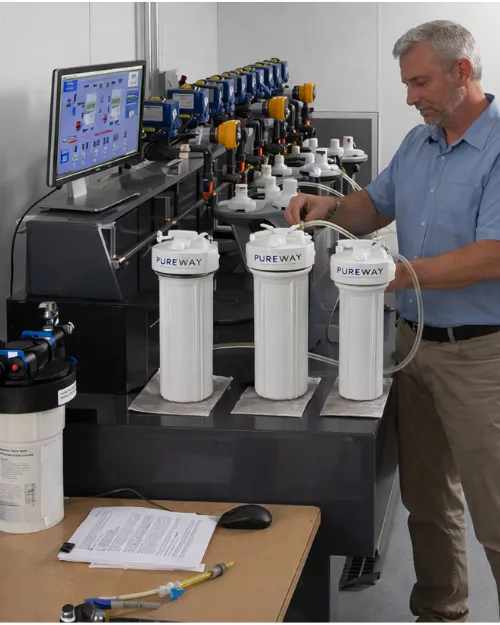
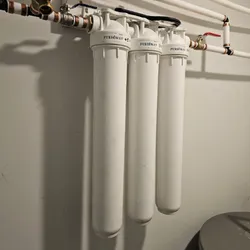
Installed in Homes Near You
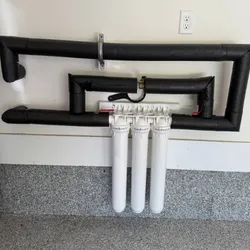
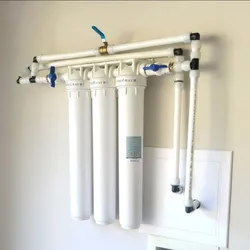
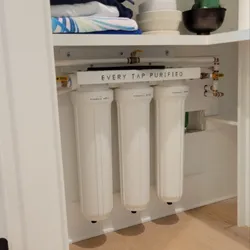
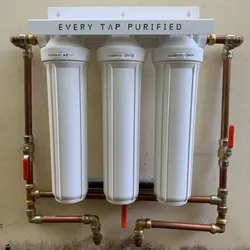
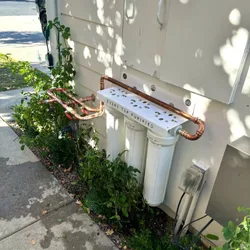
These photos show Pure Way systems installed in real homes — under sinks, in utility rooms, garages, and outdoor service areas. Each installation is tailored to the home’s plumbing layout and water needs.
No pressure. No obligation. Just clarity.
Why Pure Way is Built Differently
Pure Way’s technology was developed by Owen Boyd, a longtime engineer, inventor, and water educator who has spent decades studying what makes water not just cleaner — but easier and healthier to live with every day. After years working in computer science and engineering, he kept encountering the same challenge: water treatment hadn’t evolved at the same pace as other technologies, even as contaminants, infrastructure, and water chemistry continued to change from place to place.
Owen set out to design a system that was simple, durable, and adaptable — one that could handle real-world fluctuations in water quality while maintaining strong pressure and everyday usability in the home. Rather than targeting one issue at a time, his approach focused on the whole picture: reducing harmful contaminants, keeping beneficial minerals, and making water gentler on plumbing, appliances, and daily life — from drinking to showering.
Pure Way’s technology was developed by Owen Boyd, a longtime engineer, inventor, and water educator who has spent decades studying what makes water not just cleaner — but easier and healthier to live with every day. After years working in computer science and engineering, he kept encountering the same challenge: water treatment hadn’t evolved at the same pace as other technologies, even as contaminants, infrastructure, and water chemistry continued to change from place to place.
Owen set out to design a system that was simple, durable, and adaptable — one that could handle real-world fluctuations in water quality while maintaining strong pressure and everyday usability in the home. Rather than targeting one issue at a time, his approach focused on the whole picture: reducing harmful contaminants, keeping beneficial minerals, and making water gentler on plumbing, appliances, and daily life — from drinking to showering.
That philosophy is what drew water educator Alex Corey to the technology. After interviewing Owen on an episode of The Cultivating Change Podcast and diving deeper into the engineering behind the system, Alex chose to bring Pure Way to his local community, becoming the owner of Pure Way Wilmington in North Carolina.
No pressure. No obligation. Just clarity.
What size is right for my home?
System size depends on several factors, including the number of people in the household, overall water usage, and whether the system is filtering municipal or well water. During a consultation, we look at flow rates, plumbing layout, and usage patterns to recommend a system that fits your home without oversizing or underperforming.
Where is the system installed?
System size depends on several factors, including the number of people in the household, overall water usage, and whether the system is filtering municipal or well water. During a consultation, we look at flow rates, plumbing layout, and usage patterns to recommend a system that fits your home without oversizing or underperforming.
Does the system use electricity, salt, or chemicals?
Pure Way systems are designed to operate without electricity, salt, or chemical additives. Filtration is achieved through physical and media-based processes, not chemical treatment, which keeps operation simple and reduces ongoing maintenance.
How long do the filters last?
Filter life varies based on water quality and household usage. In most residential settings, filters are designed to last for extended periods before replacement is needed. During installation and follow-up, we provide guidance on expected replacement intervals based on your specific system and water conditions.
Will a whole-home water system improve my home’s value?
While a water filtration system is not typically listed as a formal appraisal feature, many homeowners view it as a meaningful upgrade. Clean, filtered water throughout the home can be an attractive feature for buyers, especially in areas where water quality is a common concern.
Is a warranty included?
Yes. Pure Way systems include manufacturer-backed Limited Lifetime Warranties that cover specific components for defined periods of time. Warranty details are reviewed during the consultation and installation process so you know exactly what is covered.
What does the system filter out?
Pure Way systems are designed to reduce up to 99.99% of many common water contaminants, including chlorine, chloramine, sediment, and other impurities commonly found in municipal water supplies.
For homes on well water, systems may be customized based on well testing results to address specific conditions present in the water source. Recommendations are made using available water data to ensure the system is appropriately matched to the home.
– PFAS (“forever chemicals”)
– Chlorine and chlorine/disinfection byproducts
– Heavy metals like lead and arsenic
– Microplastics and sediment
– Pharmaceuticals, pesticides
– Pathogens, microbiologicals, bacteria, viruses, cysts
Can this filter be used for buildings and businesses?
Yes. In addition to residential installations, Pure Way systems can be configured for commercial settings such as offices, restaurants, and other facilities. Commercial needs are evaluated separately to ensure the system matches usage demands and regulatory considerations.